How Many Customers Are You Losing After 6pm?
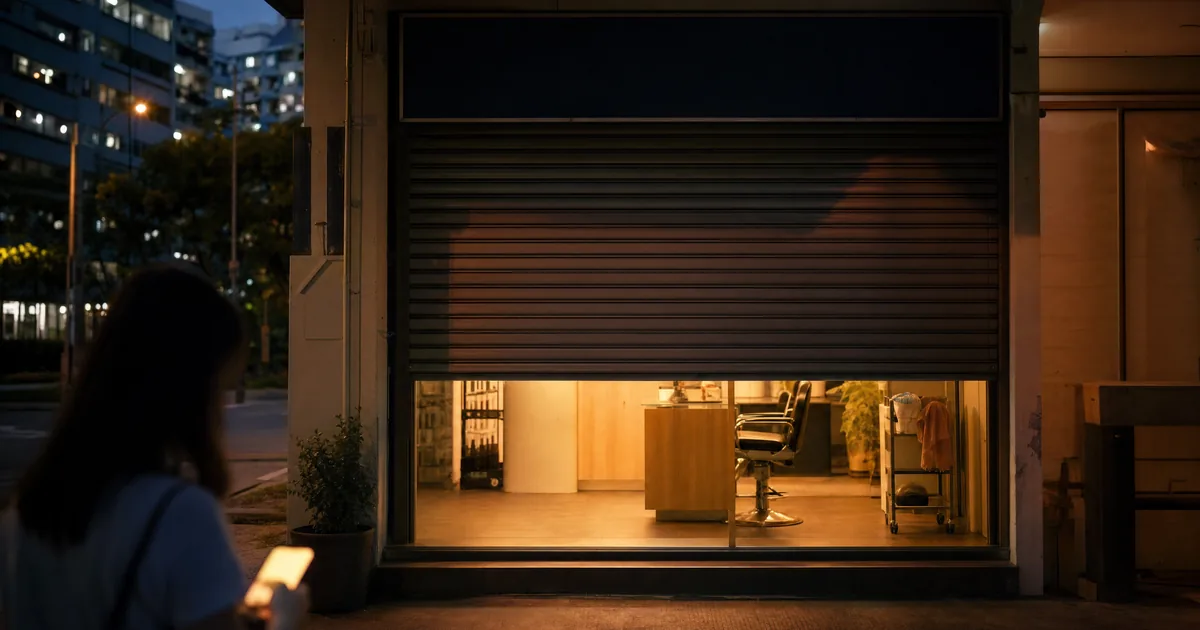
Your shop, clinic or office has a closing time. Your customers' questions don't know that. Someone deciding whether to book you thinks about it whenever it occurs to them, which for a lot of Singaporeans is after work, on the MRT home, or while scrolling their phone before bed. If your business only listens between 9 and 6, you're only hearing half the conversation.
The Hours Mismatch Nobody Plans For
Almost every SME sets its operating hours around staffing logistics: when the shop is open, when the clinic sees patients, when the office is staffed. That's a completely reasonable way to run a physical operation. The problem is that customer curiosity and decision-making don't follow the same schedule, especially for anything researched on a phone rather than transacted in person.
A parent deciding on a tuition centre for their child often does that research at 9pm, after dinner and homework are done. A couple planning a wedding vendor often compares options on a Sunday afternoon. Someone researching a clinic for a procedure often does it late at night when they can't sleep and have time to think. None of these moments line up neatly with a 9-to-6 shopfront.
What Happens to That After-Hours Message
Three things typically happen to a message that arrives after your business closes: it sits unread until the next morning, it gets a generic auto-reply that doesn't actually answer anything, or, if you're lucky, someone happens to check their phone and replies from home, off the clock, which isn't sustainable and isn't fair to that person either.
None of these are good outcomes. The first risks losing the customer to whoever answers first the next morning, possibly a competitor. The second buys a little patience but still leaves the actual question unanswered. The third quietly relies on unpaid, unplanned labour from whoever happens to be checking their phone.
Why "We'll Reply Tomorrow" Isn't Free
It's tempting to think a next-morning reply is basically fine, most people will wait overnight for a business to respond. Some will. But every hour of silence is an hour the customer is free to look elsewhere, and increasingly, "elsewhere" means a competitor whose WhatsApp or website chat answered them at 9:47pm on a Tuesday. You don't need every after-hours enquiry to be time-sensitive for this to matter, you just need enough of them to be.
A Rough Way to Estimate Your Own Exposure
Check your own enquiry channel, WhatsApp, Messenger, or your website contact form, for the last two weeks. For each new customer message, note the time it arrived. Add up how many landed outside your operating hours: evenings, weekends, public holidays. That share, whatever it turns out to be, is the portion of your incoming interest that's currently waiting until your team is back at their desk to get any kind of answer.
Then think about what those messages actually asked. If most were simple, "what time do you close," "do you have parking," "how much for X," those are exactly the kind of question that doesn't need to wait for office hours to be answered accurately.
Which Industries Feel This Most
The after-hours mismatch shows up differently depending on what you sell, but it rarely disappears entirely. Home-services businesses (renovation, cleaning, repairs) get evening enquiries from people who only have time to think about their home once they're actually home from work. Education and tuition centres get evening enquiries from parents once homework and dinner are done. Beauty and wellness businesses get weekend and evening browsing from people planning their next appointment during their own downtime. Even B2B and professional services aren't immune, a business owner comparing accountants or consultants often does that research at night, after their own working day ends.
If your business fits any of these patterns, or simply serves consumers rather than only other businesses during their working hours, it's worth assuming this mismatch applies to you until you've actually checked your own data.
The Weekend Version of the Same Problem
Evenings aren't the only blind spot. Weekends carry the same structural mismatch for many SMEs, particularly professional services and B2B businesses that operate a straightforward Monday-to-Friday schedule. A Saturday morning enquiry about a service can sit for nearly 48 hours before anyone sees it, by which point plenty of customers have already moved on to a competitor who happened to be checking their phone, or who had something answering on their behalf.
Public holidays compound this further. Singapore has a meaningful number of them scattered through the year, and each one is effectively another mini "6pm problem" stretched across an entire day, often multiple days in a row over festive periods.
What Doesn't Need to Wait
Not every after-hours message needs a person. Opening hours, pricing, general service questions, availability where a calendar is connected, these can all be answered accurately at 11pm without anyone being awake to type it. What should wait, or route straight to a person the next morning, is anything genuinely complex: a complaint, a sensitive question, a negotiation.
The goal isn't round-the-clock staffing. It's making sure the routine, high-volume questions get an instant, accurate answer regardless of the hour, while anything that needs judgement waits for someone who can actually exercise it.
The Trap of "We'll Just Check Our Phones at Home"
Many business owners and staff informally bridge this gap themselves, checking WhatsApp on personal time, replying to a customer from the dinner table or the sofa. It's a generous habit, and it's also not sustainable or fair as a long-term operating model. It blurs the line between work and personal time for whoever's doing it, it depends entirely on that person's mood and availability on any given evening, and it doesn't scale as the business grows or as that person eventually wants their evenings back. A business that structurally depends on unpaid, unplanned after-hours labour from its owner or staff has a fragility built into its foundations, even if it currently "works."
What Good After-Hours Coverage Actually Looks Like
Good after-hours coverage isn't about staffing every hour, it's about making sure the routine, answerable-without-judgement questions get a real reply regardless of the clock, while anything genuinely complex waits for a person, clearly and honestly, with an expectation set for when they'll follow up. A customer messaging at 10pm asking about pricing should get pricing. A customer messaging at 10pm with a complicated custom request can be told, honestly, that a team member will follow up the next business day, and that's a perfectly reasonable outcome as long as it's communicated rather than left as silence.
The difference between "silence until morning" and "an honest, useful reply now, plus a clear next step for anything bigger" is the entire point. Customers are generally understanding about genuine limitations, communicated clearly. They're far less forgiving of simply not knowing whether anyone received their message at all.
How This Plays Out With an AI Chatbot
An agentic AI chatbot trained on your business answers the routine after-hours questions the moment they arrive, capturing the enquiry and, where relevant, offering a booking slot or routing a request for your team to confirm the next morning. Customers get a real answer at the time they're actually asking, not a placeholder, and your team walks in each morning to a queue of qualified, already-answered leads instead of a wall of unread messages.
This isn't about pretending your business is open 24 hours. It's about your business's knowledge, and your ability to answer a straightforward question, being available even when your doors and your staff aren't.
Where to Look Next
If most of your after-hours volume lands on WhatsApp, our WhatsApp AI chatbot page covers exactly what's live and what to expect. If it's your website contact form that goes quiet overnight, see the Website AI chatbot page. And if you're not sure how big this actually is for your business, run the two-week check above before assuming either way, the answer is usually more concrete than people expect once they actually look.
Whatever you find, treat it as a starting measurement, not a verdict. A business that discovers a third of its enquiries land after hours doesn't need to solve everything overnight, it needs to close the gap on its single highest-volume after-hours question first, measure whether that alone changes anything, and expand from there. The goal is a business that's genuinely listening whenever a customer is ready to talk to it, not necessarily a business that's staffed around the clock.
It's worth revisiting this check every few months too, not just once. Your enquiry patterns shift with the seasons, with new marketing campaigns, with changes to your own operating hours. A gap you closed six months ago can quietly reopen if your customer base or channel mix has changed since, so treat this as an ongoing habit rather than a one-time audit.
None of this requires a dramatic operational overhaul to start. Pick the single most common after-hours question your business receives, confirm you can answer it accurately and instantly regardless of the clock, and build outward from there once you can see it actually working on your own real conversations.
Frequently asked questions
Do I need someone on call 24/7 to fix this?+
Is this only relevant for F&B and retail?+
What's a reasonable first step if I can't automate everything?+
Won't customers realise it's a bot and get annoyed?+
See what your after-hours enquiries could look like
Book a free demo and we'll show AI Convo answering the questions your customers ask when you're closed.
Book a free demo